
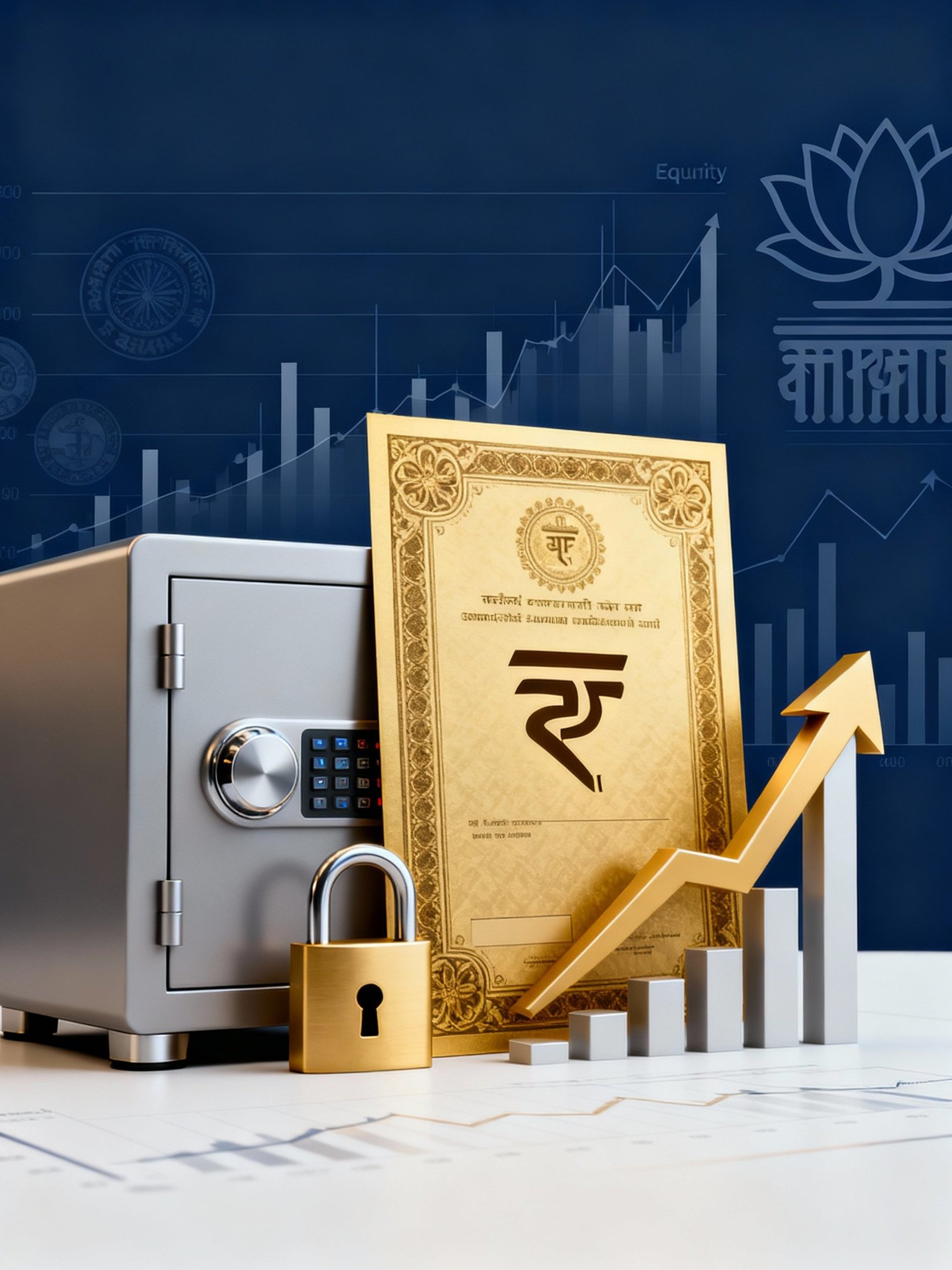
Are Bonds safe investment?
How safe are bonds compared to FD's
INVESTING


Bonds and fixed deposits (FDs) are both popular fixed-income choices in India for conservative investors seeking steady returns with low risk, but FDs edge out on absolute safety due to DICGC insurance up to ₹5 lakh per depositor per bank, while bonds offer higher yields (often 8-15% for quality corporate ones versus 6.25-7.1% for FDs) and better inflation protection for those willing to accept moderate risk.
Understanding Fixed Deposits (FDs)
Fixed deposits remain a cornerstone of Indian savings, offered by banks and NBFCs with tenures from 7 days to 10 years. They provide guaranteed returns at fixed interest rates, currently ranging from 6.25% to 7.1% for general investors in 2025, with seniors often getting 0.25-0.5% extra. The biggest draw is safety: deposits up to ₹5 lakh are insured by the Deposit Insurance and Credit Guarantee Corporation (DICGC), shielding your principal from bank failures. Early withdrawal is possible but comes with a penalty, typically a 0.5-1% rate cut, and many banks allow loans against FDs up to 90% of the value, adding flexibility for emergencies.
FDs shine for short- to medium-term goals like building an emergency fund or funding a child's education in 3-5 years. However, with India's inflation hovering around 5.3-6%, real returns (after tax and inflation) can dip to near zero or negative, eroding purchasing power over time. Taxation treats interest as "income from other sources," with TDS kicking in above ₹40,000 annually (₹50,000 for seniors), though you can claim it back via ITR.
What Are Bonds in the Indian Context?
Bonds are debt instruments issued by governments, corporations, or public sector units to raise funds, promising periodic interest (coupons) and principal repayment at maturity. In India, government bonds like G-Secs (tenures 1-40 years) yield 6.8-7.5% with zero credit risk due to sovereign backing, while corporate bonds from AAA-rated firms can deliver 8-15%, and RBI Floating Rate Savings Bonds adjust with repo rates for inflation protection. You can buy them via platforms like NSE/BSE, RBI Retail Direct, or apps from brokers like Zerodha or Groww.
Unlike FDs, bonds trade on secondary markets, offering liquidity—you can sell before maturity for potential capital gains if rates fall. However, they carry interest rate risk (prices drop when rates rise) and credit risk for non-government issuers (defaults are rare but possible, e.g., below AA ratings). Taxation mirrors FDs: interest is taxable, but long-term capital gains (over 1 year) on listed bonds get indexation benefits, reducing your liability.
Returns: Where Bonds Often Win
In 2025, top FDs from banks like SBI or HDFC top out at 7.1%, but post-inflation and tax, you're left with slim pickings. Corporate bonds from blue-chip companies frequently outperform at 9-12% for 5-10 year tenures, and inflation-linked bonds like IINSS-C provide real yields of 1-2% above CPI. For instance, if inflation averages 5.5%, a 7% FD gives ~1.5% real return, while an 9.5% bond nets ~4%. Over 10 years, compounding makes this gap massive: ₹10 lakh in FD grows to ~₹20 lakh, but the same in bonds could hit ₹25 lakh or more.
Safety Breakdown: FDs for Ironclad Protection
FDs are unbeatable for principal safety in India—no market swings, no default worries within insurance limits. Even if a bank like Yes Bank faces issues (as in 2020), your money is secure up to ₹5 lakh. Spread across multiple banks to maximize coverage. Bonds match this for government ones (risk-free), but corporate bonds depend on the issuer's rating—stick to AAA/AA from PSUs like NTPC or Reliance for near-FD safety with better yields. Historical defaults are low (under 0.5% for investment-grade), but always check CRISIL/ICRA ratings.
Liquidity and Accessibility
FDs tie up money with penalties, though some offer cumulative/non-cumulative options and easy online booking via net banking. Bonds excel here: sell anytime on exchanges without penalties, though prices fluctuate (e.g., a rate hike could mean a 5-10% paper loss short-term). Minimum investments are low—₹10,000 for many bonds vs. ₹1,000-5,000 for FDs—making them accessible. Demat accounts simplify everything, and tax-saving bonds under 80C (like REC or NHAI) add deductions up to ₹1.5 lakh.
Taxation and Long-Term Suitability
Both face similar tax treatment on interest (slab rates, 30% for high earners), but bonds offer LTCG indexation for secondary sales, potentially slashing taxes. No TDS on government bonds below certain thresholds. For retirees or risk-averse folks, FDs provide predictable monthly payouts. Bonds suit diversified portfolios, hedging inflation better for 5+ year horizons—ideal if you're building wealth alongside equities or your FIRE journey.
Who Should Choose What?
Pick FDs for absolute peace of mind, emergency funds, or goals under 5 years—perfect if you're super conservative or in a high-tax bracket chasing simplicity. Go for bonds if you want 2-5% extra yield, inflation-beating growth, and portfolio variety; start with 30-50% allocation in government/corporate bonds. A smart hybrid: park 50-60% in FDs for safety, 40% in bonds for juice. In India's volatile economy, bonds edge ahead for long-term value, but ladder both (stagger maturities) to manage risks. Calculate your needs with online calculators and consult a SEBI-registered advisor for personalized fit.
Help
Questions? Reach out anytime.
reachus@69waystoinvest.com
© 2026. All rights reserved.
Our Team-
Shrinivas B(MBA)
Ravi (MBA)
Prasad (Mcom)