
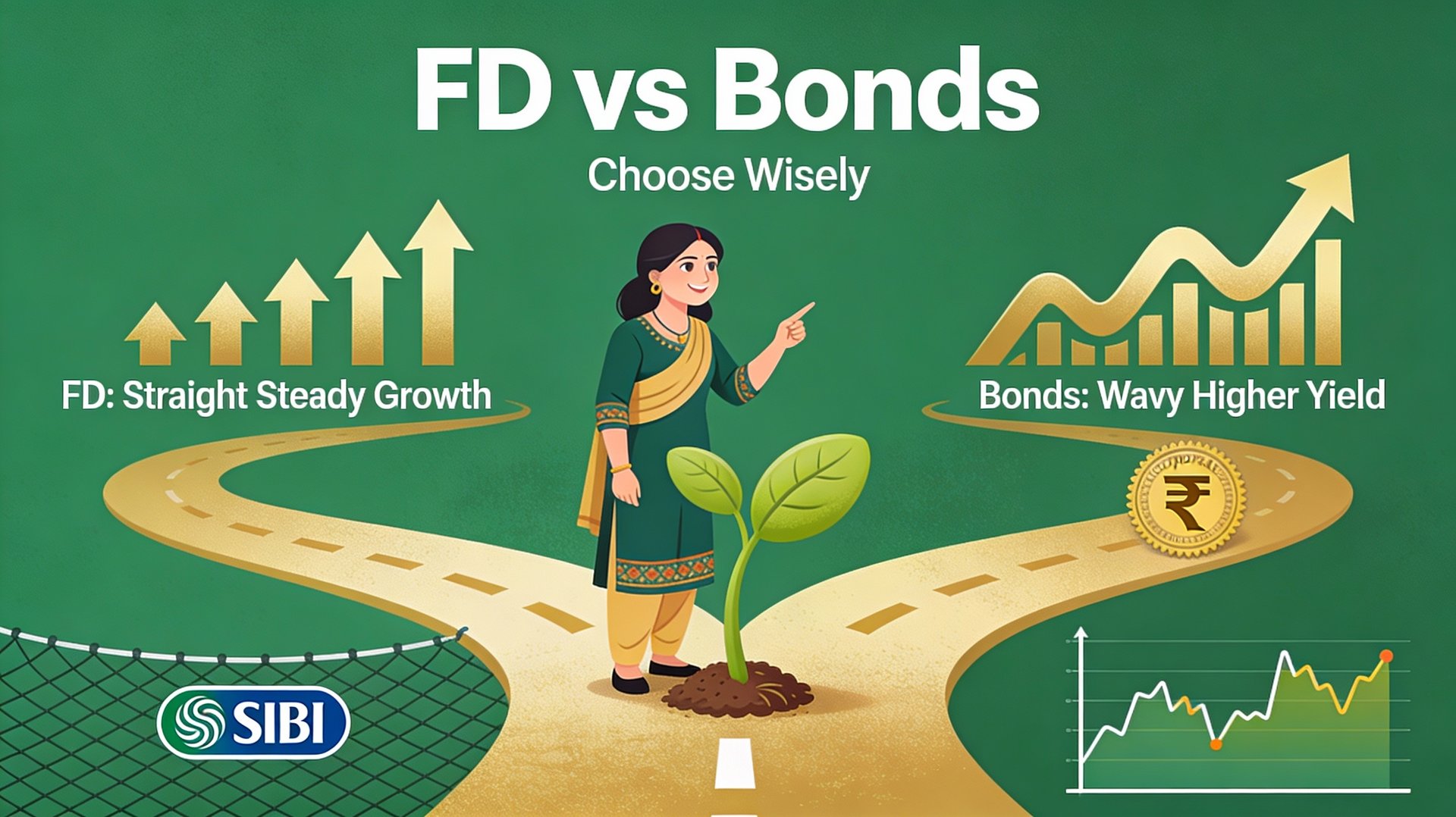
Bonds Vs Fd (pros and cons)
Difference in investing in Bonds and Fixed deposits...
INVESTING
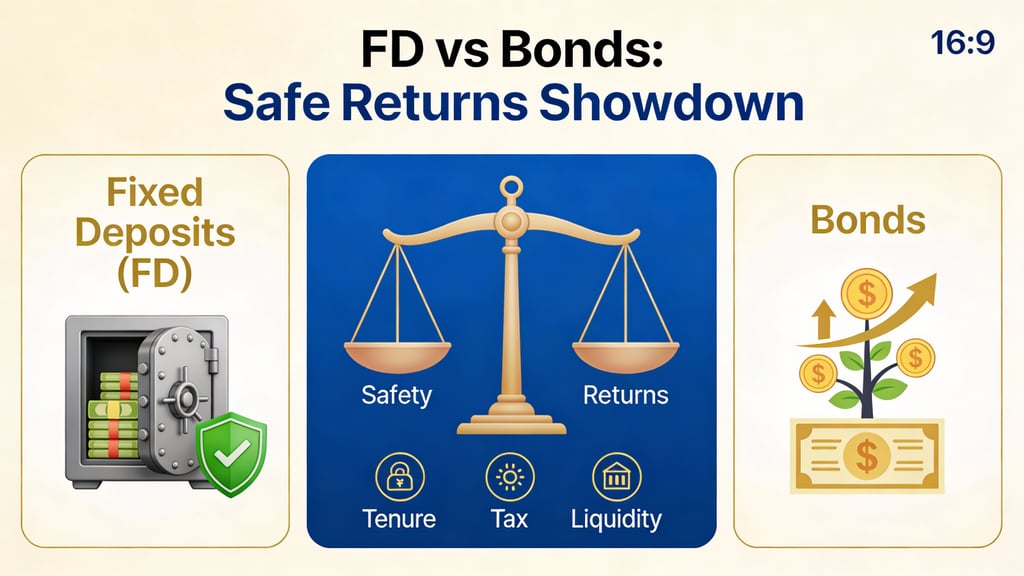
Fixed Deposits (FDs) and bonds are two safe ways to grow money in India, but they work differently for different goals. FDs give bank-guaranteed returns, while bonds pay fixed interest from governments or companies with chances for better yields but some extra risk.
Fixed Deposits Explained
FDs let you lock money with a bank for 7 days to 10 years at fixed rates (around 6.5-8.5% now). Interest pays monthly, quarterly, or at end.
Good sides:
Super safe with government insurance up to ₹5 lakh per bank.
Guaranteed returns—no market surprises.
Easy options for seniors (0.25-0.5% extra) and flexible tenures.
Borrow against FD without breaking it.
Bad sides:
Returns barely beat inflation (real gain 3-4%).
Early withdrawal cuts interest by 0.5-1%.
Tax on interest above ₹40,000 (TDS deducted).
Bonds Explained
Bonds are like IOUs from government or companies. Buy at face value, get regular coupon interest (7-12%), and principal back at maturity (1-40 years).
Good sides:
Higher returns than FDs, especially good corporate bonds (9-14%).
Sell anytime on stock exchange if needed.
Some tax perks like indexation on long-term gains.
Prices rise if interest rates fall (extra profit).
Bad sides:
Risk of company not paying back (check AAA ratings).
Bond value drops if rates rise.
Less liquid for some types; minimum ₹10,000.
No insurance like FDs.
Head-to-Head Comparison
FDs win for absolute safety and simplicity—perfect for emergency funds or retirees. Bonds shine for higher income and trading flexibility, good for 5+ year goals.
Both beat savings accounts (3-4%). Mix them: 50% FD for safety, 50% bonds for growth. Ladder tenures (split across 1-5 years) to manage rate changes.
Start small via apps like Groww, Zerodha, or bank portals. Check ratings and match to your risk—neither beats equity long-term, but both protect capital smartly.
Help
Questions? Reach out anytime.
reachus@69waystoinvest.com
© 2026. All rights reserved.
Our Team-
Shrinivas B(MBA)
Ravi (MBA)
Prasad (Mcom)