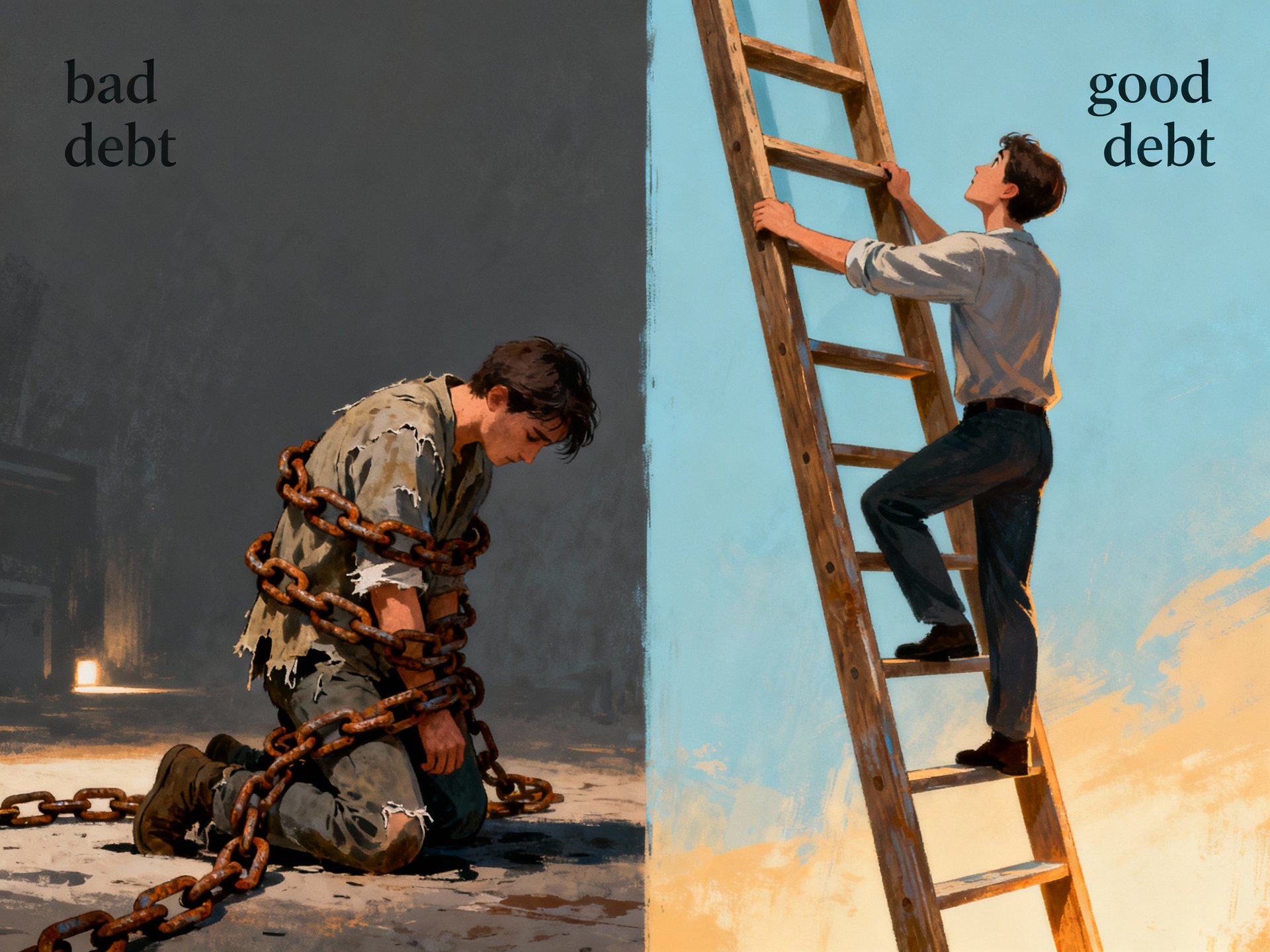
Good debt VS bad debt
Good Vs Bad debt explained..
FINANCE BASICS
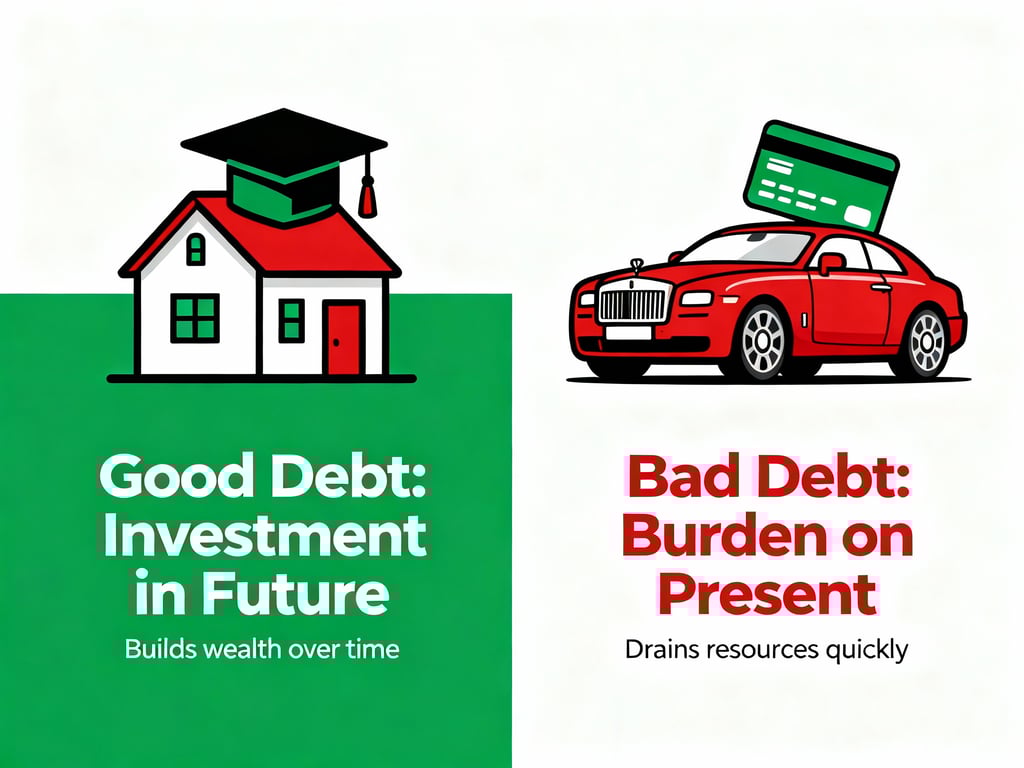
Good debt is borrowing that helps you build wealth or improve your earning power, while bad debt is borrowing that traps you in high interest payments for things that lose value or don’t improve your finances. The same type of loan can be “good” or “bad” depending on interest rate, purpose, and whether you can comfortably repay it.
What is good debt?
Good debt is money borrowed to buy an asset or skill that can increase your net worth or future income, and that you can realistically repay on time. It usually has lower interest rates, clear repayment terms, and sometimes tax benefits or credit-score benefits if handled well.
Common examples of good debt (when used wisely):
Home loan (mortgage) to buy a house that builds equity over time.
Education loan that meaningfully boosts your earning potential.
Business loan to start or expand a profitable business.
Low-interest loan to buy a primary vehicle needed for work or income.
What is bad debt?
Bad debt is borrowing for things that don’t generate income or long-term value, or that come with very high interest and fees that strain your cash flow. It often funds lifestyle or impulse purchases and can damage your credit score if repayments are missed or balances stay high.
Common examples of bad debt:
Credit card balances carried month-to-month for shopping, eating out, or vacations.
Payday loans, loan apps, and other high-interest short-term loans.
EMIs for luxury gadgets, second vehicles, or depreciating items you couldn’t afford in cash.
“Buy now, pay later” taken repeatedly for non-essential spending.
Key differences
Good debt builds assets or earning power and tends to grow net worth over time with lower, reasonable interest rates and planned repayments. Bad debt funds consumption or fast-depreciating items, reduces net worth with high or variable rates, and often strains budgets with unplanned EMIs.
When good debt turns bad
Even “good” loans become harmful if you over-borrow, pay too much interest, or don’t have a realistic repayment plan. A student loan, home loan, or business loan can all turn into bad debt if EMIs consume most of your income or force you to borrow again just to survive.
Warning signs your debt is becoming a problem:
EMIs plus other obligations take more than about 30–40% of your net income.
You use one loan or card to pay another.
You routinely miss payments or pay only minimum dues.
How to use debt wisely
Focus on borrowing for things that either increase income, build assets, or meaningfully improve your life at a cost you can handle. Before taking any loan, ask: “Will this purchase grow my wealth or earning power?” and “Can I still manage EMIs if my income drops or expenses rise slightly?”
Practical guidelines:
Prioritize paying off high-interest debts (like credit cards and payday-style loans) as fast as possible.
Keep total EMIs within a safe portion of your income.
Build an emergency fund so you don’t rely on bad debt in crises.
Use credit cards only for spends you can clear in full every month
Help
Questions? Reach out anytime.
reachus@69waystoinvest.com
© 2026. All rights reserved.
Our Team-
Shrinivas B(MBA)
Ravi (MBA)
Prasad (Mcom)