
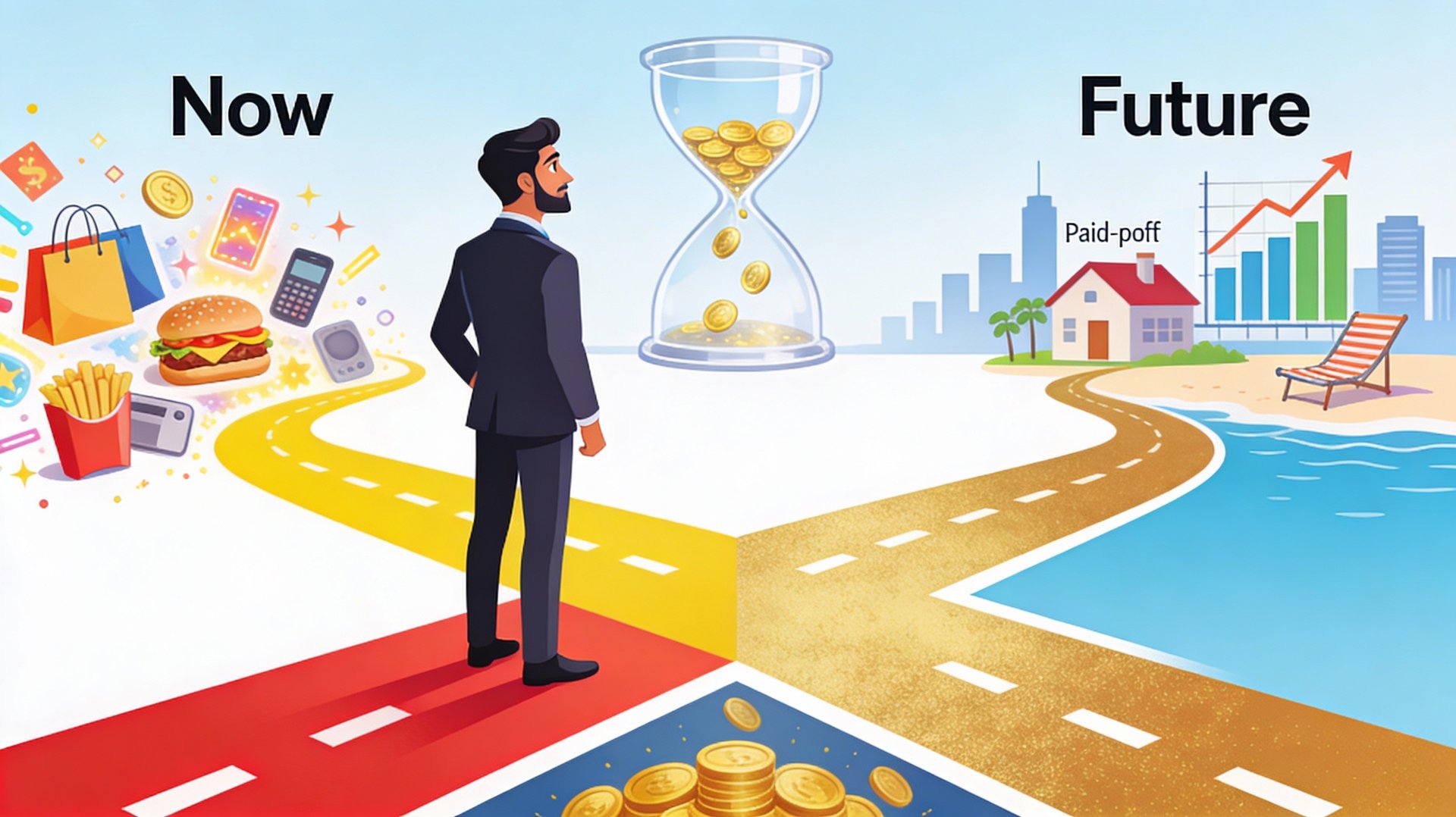
How Delayed gratification helps to build wealth?
Delayed gratification explained...
INVESTING
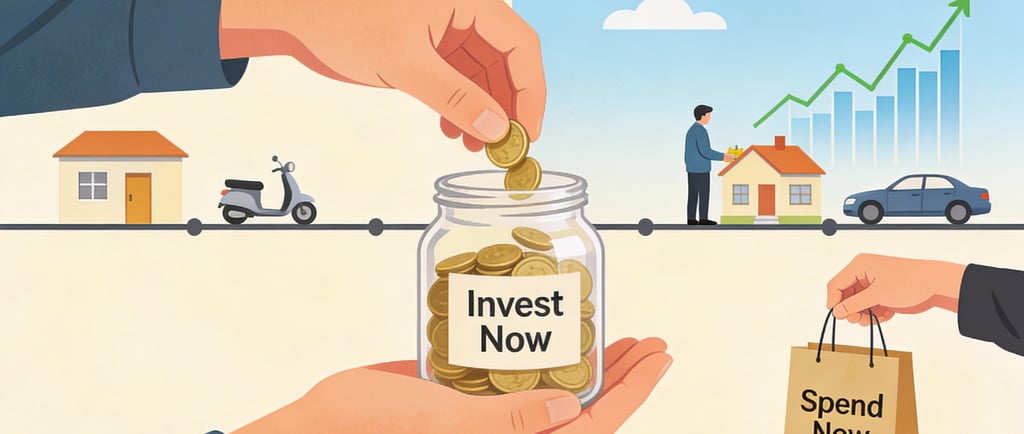
Delayed gratification is the ability to resist small, immediate rewards in favour of larger, long-term gains, and it sits at the core of sustainable wealth-building. It is less about sacrifice and more about choosing the future self over the current impulse.
What delayed gratification really means
Delayed gratification is the conscious decision to postpone consumption today so that savings, investments, skills, or assets can grow over time. Instead of asking “Can I afford this now?” it asks “What will this cost my future if I spend now?” In money terms, it is the bridge between earning and compounding: without delay, compounding never gets the time it needs to work.
Why the brain prefers instant rewards
Human brains are wired for short-term survival, not long-term financial planning. The dopamine hit from quick purchases, lifestyle upgrades, or impulse spending feels concrete, while future benefits feel distant and abstract. Wealth builders learn to “reprogram” this bias by creating emotional excitement around long-term goals—financial freedom, early retirement, or a business empire—so that saying no today feels like saying yes to something bigger.
How delayed gratification fuels compounding
Compounding needs three ingredients: money, return, and time—and time is the one most people destroy with instant gratification. Every rupee not spent but invested gains the chance to earn returns, and those returns earn their own returns year after year. Over a decade or two, the difference between consuming now versus investing now can be the difference between struggling lifestyle inflation and complete financial independence.
Lifestyle choices and wealth trajectory
The gap between income and lifestyle is where wealth is born, and delayed gratification keeps that gap open. Choosing a modest car over an EMIs-heavy luxury one, renting wisely instead of over-stretching on a home, or resisting constant gadget upgrades preserves cash for assets. People who repeatedly delay lifestyle jumps when their income rises (avoiding “lifestyle creep”) build a surplus that can be directed into equities, businesses, or real estate.
Building financial discipline through habits
Delayed gratification is not a one-time act but a habit system. Automatic investing (SIPs, recurring deposits, or auto-transfers to brokerage accounts) removes the monthly decision and ensures “pay yourself first” happens before discretionary spending. Simple rules—24-hour cooling-off before non-essential purchases, fixed savings percentage of income, or spending only from predefined “fun money”—gradually trains the mind to normalise waiting.
Emotional resilience and long-term investing
Wealth building demands enduring boredom and volatility, and delayed gratification provides the emotional muscle for both. Instead of chasing hot tips, timing the market, or panic selling during corrections, a delayed-gratification mindset focuses on process: regular investing, holding quality assets, and letting time work. This ability to delay the emotional need for constant action or instant results protects portfolios from self-inflicted damage.
Linking delayed gratification to life goals
Delayed gratification becomes easier when tied to clear, vivid goals rather than abstract numbers. Saving and investing with a named purpose—early retirement at 45, children’s education without loans, world travel every year, or starting a passion business—turns “I can’t buy this now” into “I am choosing my dream instead.” The clearer the vision, the less painful the delay feels.
Practical ways to practice delayed gratification
Define a compelling long-term financial vision (net-worth target, timeline, and lifestyle picture).
Automate a fixed percentage of income into investments before any spending.
Use waiting rules (24–72 hours) for big purchases to kill impulsive decisions.
Celebrate financial milestones (SIP corpus levels, debt closed, first dividend income) to keep long-term motivation high.
In wealth building, delayed gratification is not about never enjoying money; it is about sequencing enjoyment—invest first, let compounding work, and enjoy spending from strength instead of from insecurity.
Help
Questions? Reach out anytime.
reachus@69waystoinvest.com
© 2026. All rights reserved.
Our Team-
Shrinivas B(MBA)
Ravi (MBA)
Prasad (Mcom)