
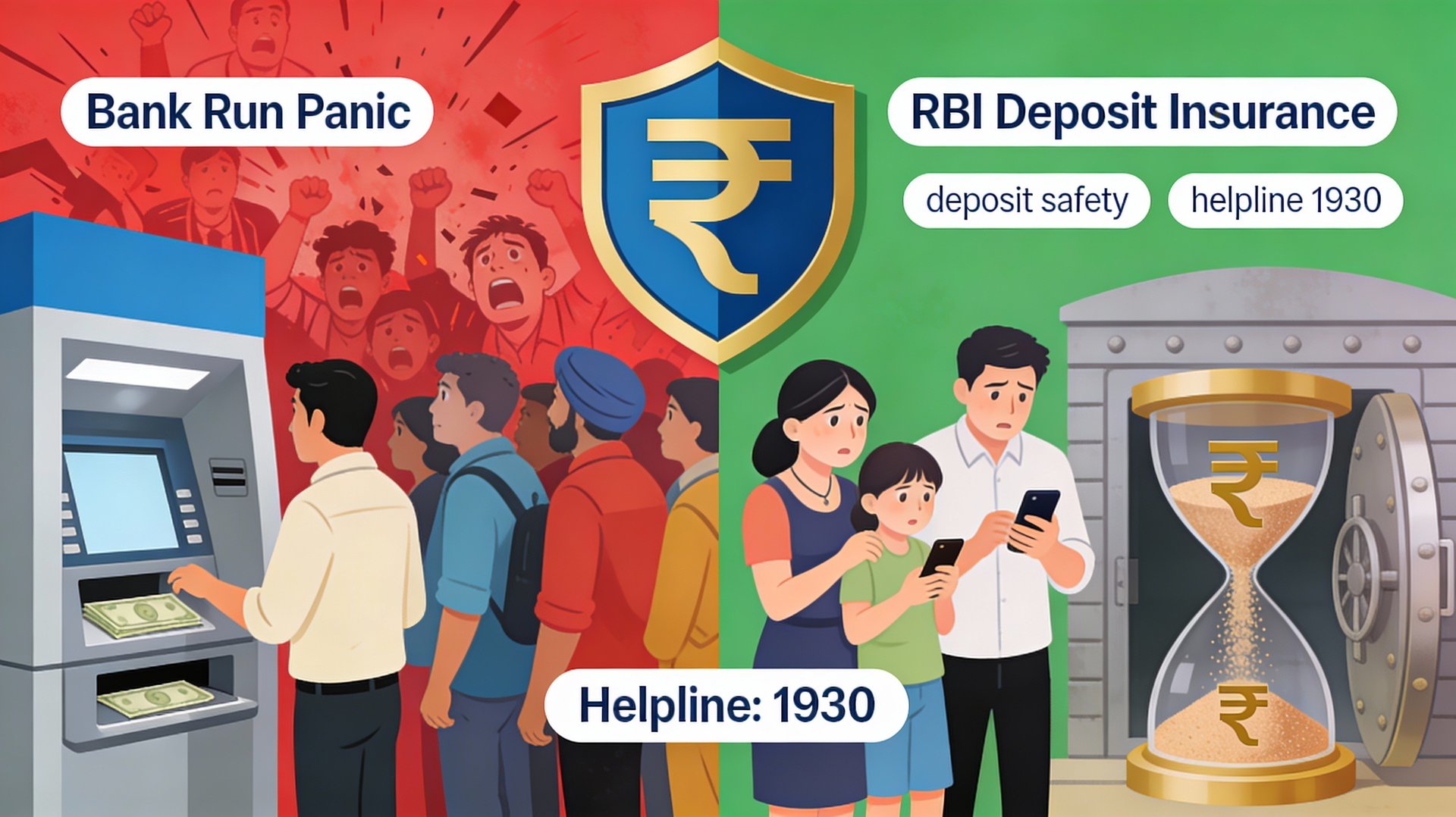
What is Bank Run?
How bank run impacts liquidity of a bank and how safe are your funds in banks?
BANKING
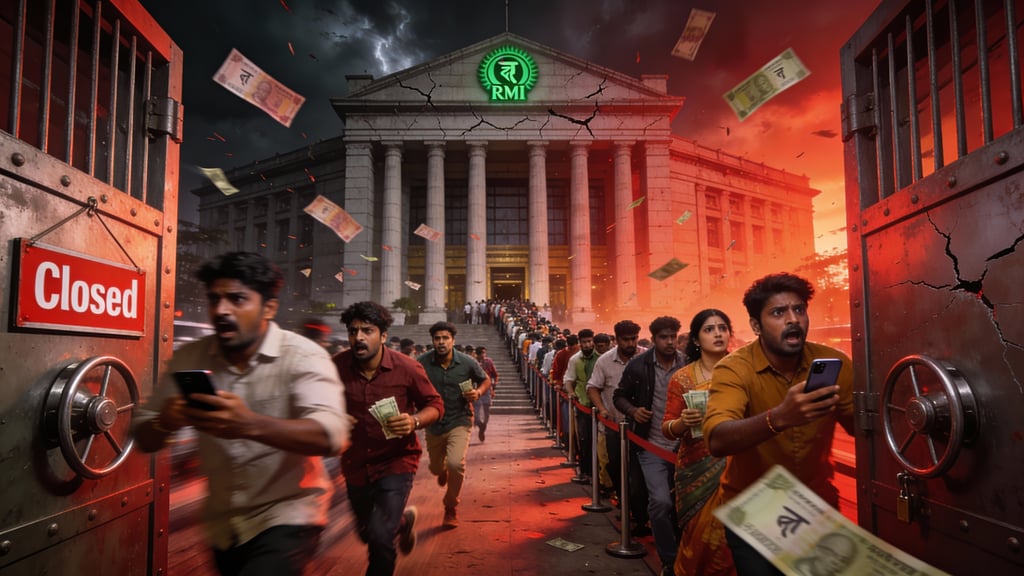

Bank runs occur when a large number of depositors withdraw their money simultaneously from a bank due to fears of its insolvency, potentially leading to collapse.
Understanding Bank Runs
Banks function on a fractional reserve system, keeping only a small portion of deposits as cash (typically 4-10% in India) while lending the rest for profit. A bank run starts with panic—triggered by rumors, bad news like non-performing assets (NPAs), or economic downturns—causing depositors to rush for withdrawals. Since banks can't pay everyone instantly, even solvent ones fail, creating a self-fulfilling crisis.
Historical Context in India
India's banking history includes scares like the 1960s cooperative bank failures and the 1990s Harshad Mehta scam that eroded trust. More recently, the 2018 IL&FS default (₹91,000 crore exposure) sparked liquidity fears across shadow banks. In 2020, Yes Bank faced a classic run with ₹16,000 crore outflows in days due to high NPAs (over 20%), forcing RBI intervention—a moratorium and reconstruction with SBI infusing ₹7,250 crore. Punjab & Maharashtra Co-operative Bank (PMC) in 2020 saw similar panic over governance issues, with depositors queuing despite RBI's ₹5 lakh insurance cap.
RBI's Safeguards
The Reserve Bank of India (RBI) prevents runs through robust tools:
DICGC Insurance: Covers up to ₹5 lakh per depositor across all banks, protecting 98.4% of accounts (average balance under ₹1 lakh).
Liquidity Coverage Ratio (LCR): Mandates banks hold high-quality liquid assets for 30-day stress.
Prompt Corrective Action (PCA): Flags weak banks early for restrictions on lending/dividends.
Lender of Last Resort: RBI provides emergency liquidity via repo auctions or direct infusions.
Digital Shift: UPI and net banking reduce physical queues, as seen in COVID-era stability.
Lessons for Investors
Spread deposits across banks to stay under ₹5 lakh limit. Monitor RBI alerts on NPAs via the website or apps. In crises, avoid panic—withdrawals worsen runs, but insurance and RBI backstops ensure most recover funds eventually.
Help
Questions? Reach out anytime.
reachus@69waystoinvest.com
© 2026. All rights reserved.
Our Team-
Shrinivas B(MBA)
Ravi (MBA)
Prasad (Mcom)