
When to invest in Gold and Silver?
Gold and silver ratio explained...
BULLION
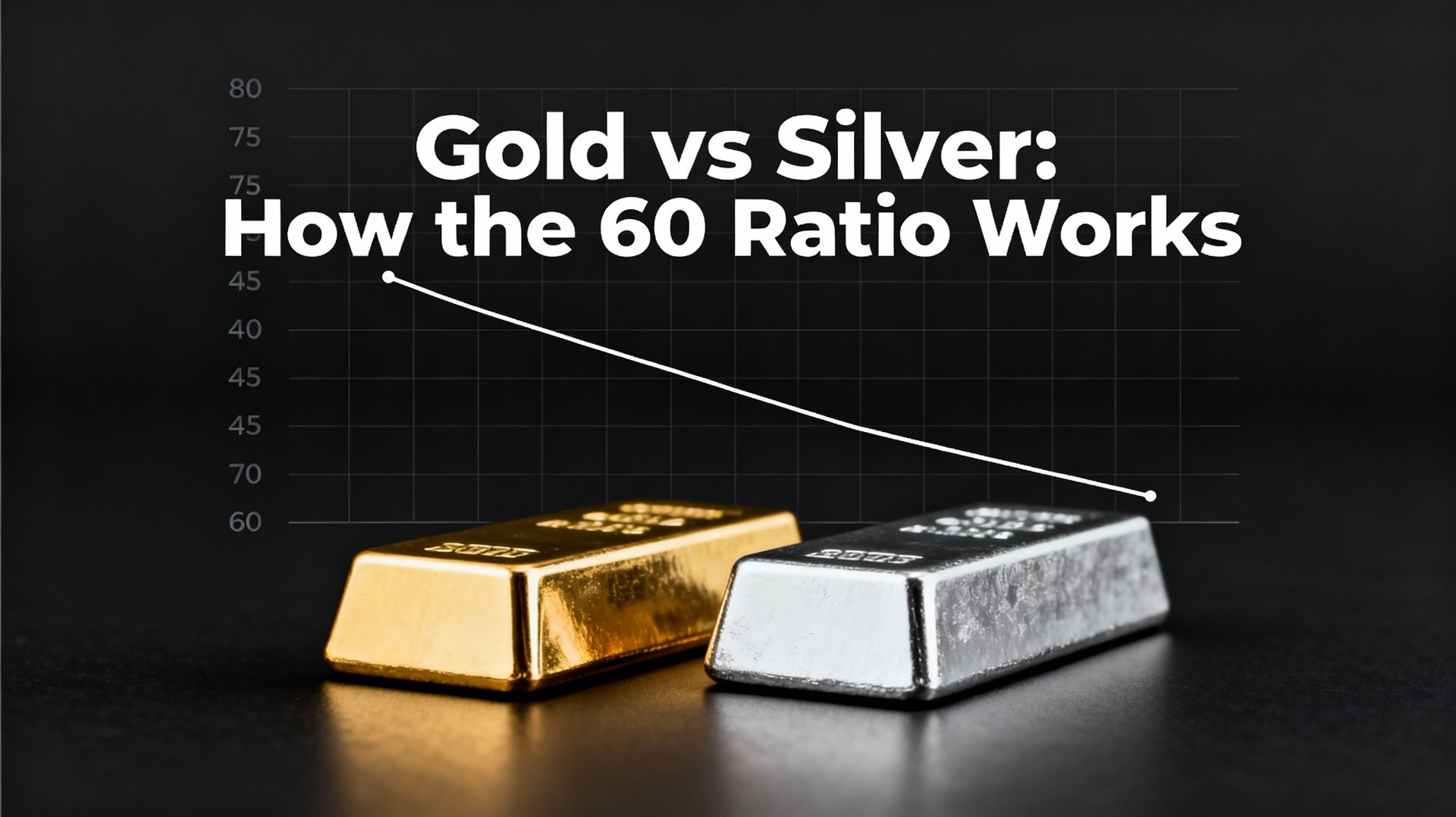
If you’re investing in gold and silver, the gold–silver ratio is one of the most powerful tools to decide when to buy which metal. A ratio of 60 is often seen as a “fair value” or long-term average, and it can tell you whether gold is cheap or expensive relative to silver right now. In this post, I’ll explain what a 60:1 ratio means, how to use it in your portfolio, and simple rules for when to favour gold or silver in 2025–2026.
What Is the Gold–Silver Ratio?
The gold–silver ratio simply tells you how many ounces of silver you need to buy one ounce of gold. You calculate it as:
Gold–Silver Ratio=Price of 1 oz goldPrice of 1 oz silverGold–Silver Ratio=Price of 1 oz silverPrice of 1 oz gold
For example, if gold is ₹1,86,621 per ounce and silver is ₹31,103 per ounce, the ratio is:
1,86,62131,103≈6031,1031,86,621≈60
So a 60:1 ratio means 60 ounces of silver = 1 ounce of gold in value. Historically, this has been close to the long-term average, so many investors treat it as a “neutral” or “fair” level.
What Does a Ratio of 60 Tell You?
A ratio around 60 suggests that gold and silver are roughly in balance with their historical relationship. When the ratio is:
Above 60–70 (e.g., 80–100+): Gold is relatively expensive compared to silver.
This often happens during deep fear (recession, war, high inflation) when investors rush into gold as a safe haven, while silver lags because it’s also an industrial metal.Below 60 (e.g., 40–50): Silver is relatively expensive compared to gold.
This usually occurs in strong bull markets or economic recovery, when industrial demand for silver (solar, EVs, electronics) pushes its price up faster than gold.
So, a ratio of 60 is like the “middle ground” – neither metal is clearly cheap or expensive relative to the other.
The 80/60 Rule: When to Buy Gold vs Silver
Many experienced precious metals investors use a simple tactical rule called the 80/60 rule to decide when to favour gold or silver:
When ratio ≥ 80:1 → Buy silver (or add more silver)
At 80+, silver is historically cheap relative to gold. This is a good time to buy silver bars, coins, or ETFs, because the ratio tends to fall back toward 60–70 over time, meaning silver can outperform gold.When ratio ≤ 60:1 → Buy gold (or add more gold)
At 60 or below, gold is relatively cheap. This is a good time to buy gold coins, bars, or ETFs, because the ratio often rises again, giving gold a chance to outperform.
For Indian investors, this means:
If the USD gold–silver ratio is above 80, consider allocating more of your precious metals budget to silver (e.g., 70–80% new purchases in silver).
If the ratio is near or below 60, shift more toward gold (e.g., 70–80% new purchases in gold).
How to Use This in Your Portfolio (Simple Strategy)
Here’s a practical way to apply the 60 ratio in your own investing:
Track the ratio monthly
Check the gold–silver ratio once a month using a reliable site. Use USD prices for consistency, then convert to INR for your buying decisions.Set your own “buy zones”
Buy silver aggressively when ratio > 80
Buy gold more when ratio < 60
Between 60–80, split new purchases roughly 50:50 or stick to your normal allocation.
Rebalance when the ratio moves sharply
If the ratio jumps from 60 to 90, consider selling a small portion of gold and buying silver.
If it falls from 60 to 45, consider selling some silver and buying gold.
This keeps your portfolio aligned with relative value, not just emotions.Combine with your risk profile
Conservative investors: Keep a higher weight in gold (e.g., 60–70% of metals allocation).
Growth-oriented investors: Allow a higher weight in silver (e.g., 50–60%) when the ratio is high.
When to Invest in Gold (Ratio ≤ 60)
Favour gold when:
The gold–silver ratio is at or below 60 (gold is relatively cheap).
There is high inflation, currency weakness, or geopolitical tension (gold shines as a safe haven).
You want stability and lower volatility in your metals allocation.
Good options for Indian investors: Sovereign Gold Bonds (SGBs), gold ETFs, or physical coins/bars from trusted mints.
When to Invest in Silver (Ratio ≥ 80)
Favour silver when:
The gold–silver ratio is 80 or higher (silver is relatively cheap).
The economy is recovering, industrial activity is rising, and demand for solar, EVs, and electronics is strong.
You can tolerate higher volatility for potentially higher returns.
Good options: Silver ETFs, silver coins/bars, or even small-cap mining stocks if you’re comfortable with equity risk.
Practical Example (2025–2026)
As of late 2025, the gold–silver ratio is around 80–85 in USD terms, above the long-term average of ~60–70. This suggests silver is relatively undervalued, so many experts are recommending a higher allocation to silver for new purchases.
If the ratio falls back toward 60 in 2026, it may be time to shift more toward gold again. By using this ratio as a guide, you can buy more of the cheaper metal and sell some of the expensive one, improving your long-term returns without trying to time the market perfectly.
Final Thoughts for Indian Investors
The gold–silver ratio of 60 is not a magic number, but it’s a powerful reference point. When the ratio is high (80+), silver is usually the better buy; when it’s low (60 or below), gold becomes more attractive. By combining this with your risk appetite and a simple rule like the 80/60 strategy, you can build a smarter, more disciplined precious metals portfolio that works in both bull and bear markets.
Help
Questions? Reach out anytime.
reachus@69waystoinvest.com
© 2026. All rights reserved.
Our Team-
Shrinivas B(MBA)
Ravi (MBA)
Prasad (Mcom)