
Who creates Inflation in the economy?
Inflation creators (Macro factors)
FIAT MONEY
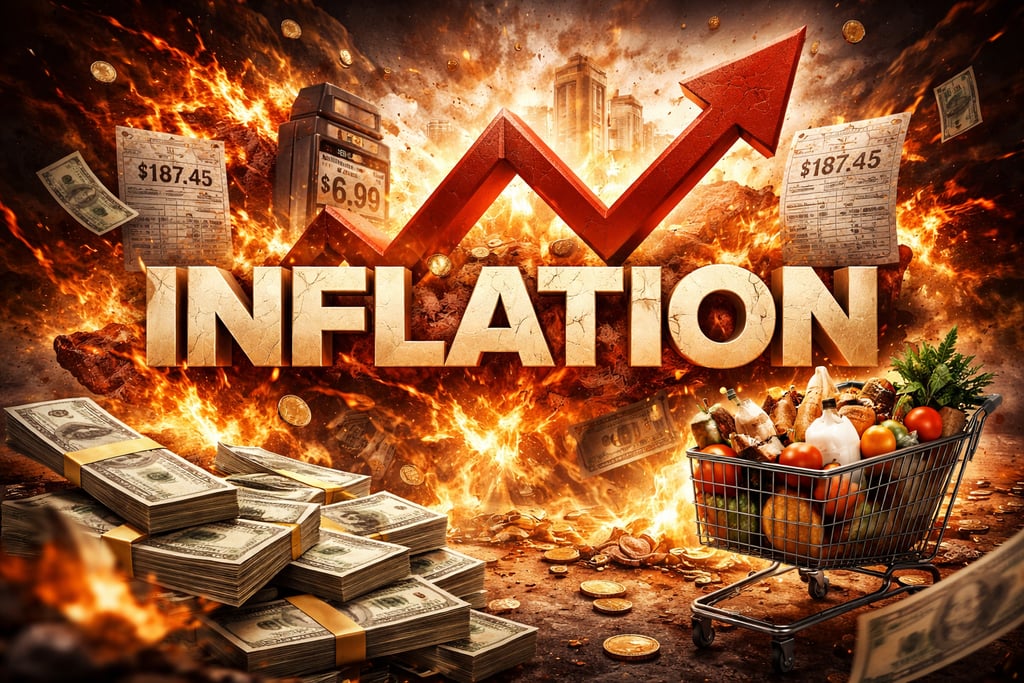
Inflation is often blamed on “the system,” but in reality, it is influenced by a few key institutions and forces that shape how money flows through an economy. While no single entity “creates” inflation alone, a combination of actions by governments, central banks, businesses, and global players can push prices higher.
1. Central Banks
The most powerful driver of inflation is the central bank—like the Reserve Bank of India. By controlling interest rates and the money supply, central banks directly influence inflation. When they print more money or keep interest rates very low, borrowing increases, demand rises, and prices tend to go up. This is often done intentionally to stimulate growth, but too much liquidity can overheat the economy.
2. Governments (Fiscal Policy)
Governments play a major role through spending and taxation. When governments run large deficits—spending more than they earn—they often borrow heavily or indirectly rely on money creation. Programs like subsidies, infrastructure spending, or stimulus packages can boost demand quickly. While helpful in the short term, excessive spending without matching productivity can lead to inflation.
3. Commercial Banks and Credit System
Banks expand the money supply through lending. When banks aggressively give loans—home loans, personal loans, business credit—it increases purchasing power in the economy. More money chasing the same goods leads to price increases. In boom periods, easy credit can quietly fuel inflation without people realizing it.
4. Corporations and Businesses
Large companies also influence inflation through pricing power. When input costs rise (like raw materials, wages, or energy), businesses often pass those costs to consumers. In some cases, dominant firms may increase prices even more to protect margins, especially when competition is low. This is often called “cost-push” or even “profit-led” inflation.
5. Commodity Producers and Global Events
Global suppliers of oil, gas, metals, and food have a huge impact. For example, decisions by groups like OPEC can restrict oil supply, causing fuel prices to surge worldwide. Since fuel affects transport, manufacturing, and daily life, such increases ripple across the entire economy, pushing inflation higher.
6. Consumers (Demand Behavior)
Interestingly, consumers themselves can contribute to inflation. When people expect prices to rise, they tend to spend more quickly—buying homes, goods, or stocks before prices go up further. This surge in demand can actually cause the inflation they fear, creating a self-reinforcing cycle.
In reality, inflation is not caused by a single villain. It is the result of interactions between policy decisions, financial systems, corporate behavior, and global forces. Understanding these drivers helps individuals make better financial decisions—whether it’s investing, saving, or simply managing everyday expenses.
In the end, inflation is less about “who creates it” and more about how different forces collectively push the value of money up or down over time.
Help
Questions? Reach out anytime.
reachus@69waystoinvest.com
© 2026. All rights reserved.
Our Team-
Shrinivas B(MBA)
Ravi (MBA)
Prasad (Mcom)