
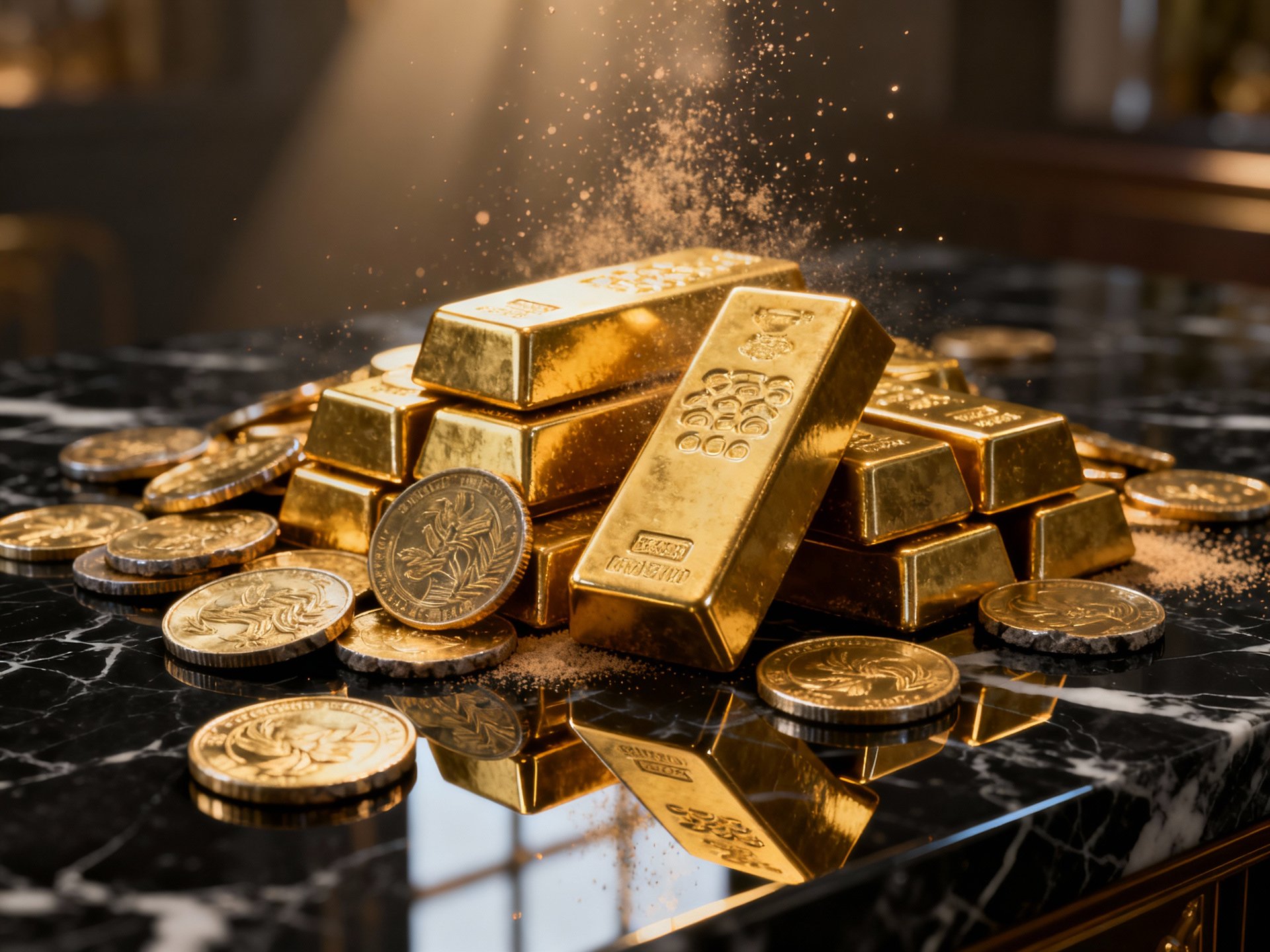
Why gold loves uncertainty?
Why gold prices jump during chaos?
BULLION
Gold has always had a special relationship with uncertainty. Whenever fear rises in the economy — whether due to inflation, war, financial crises, or currency weakness — gold tends to shine the brightest. But why does this happen?
1. Gold Is a Safe Haven
Unlike stocks or businesses, gold doesn’t depend on profits, earnings, or economic growth. It is a physical asset with limited supply. When investors lose confidence in financial systems or governments, they move money into gold to protect their wealth.
2. Protection Against Inflation
Gold is often seen as a hedge against inflation. When central banks print excessive money and currencies lose value, gold usually rises because it cannot be printed or artificially created.
3. Fear Creates Sudden Demand
Gold rallies are driven by psychology. During uncertainty:
Stock markets fall
Investors panic
Capital seeks safety
That surge in demand causes sharp and sometimes explosive price movements.
Examples of Huge Gold Price Jumps
1970s Inflation Crisis:
Gold rose from around $35 in 1971 to about $850 in 1980 — a massive increase driven by high inflation and economic instability.
2008 Global Financial Crisis:
After the collapse of major financial institutions, gold surged from around $700–800 in 2008 to nearly $1,900 by 2011.
COVID-19 Pandemic (2020):
Amid global lockdowns and massive stimulus printing, gold climbed from roughly $1,500 to over $2,000 within months.
Final Thought
Gold doesn’t move dramatically in calm markets. It thrives on fear, inflation, and instability. While it may not always deliver high long-term growth like equities, it has repeatedly proven its power during times when investors need protection the most.
That’s why gold loves uncertainty — and uncertainty loves gold.
Help
Questions? Reach out anytime.
reachus@69waystoinvest.com
© 2026. All rights reserved.
Our Team-
Shrinivas B(MBA)
Ravi (MBA)
Prasad (Mcom)