
Why SIP should never be stopped?
Why not stopping the SIP matters?
INVESTING
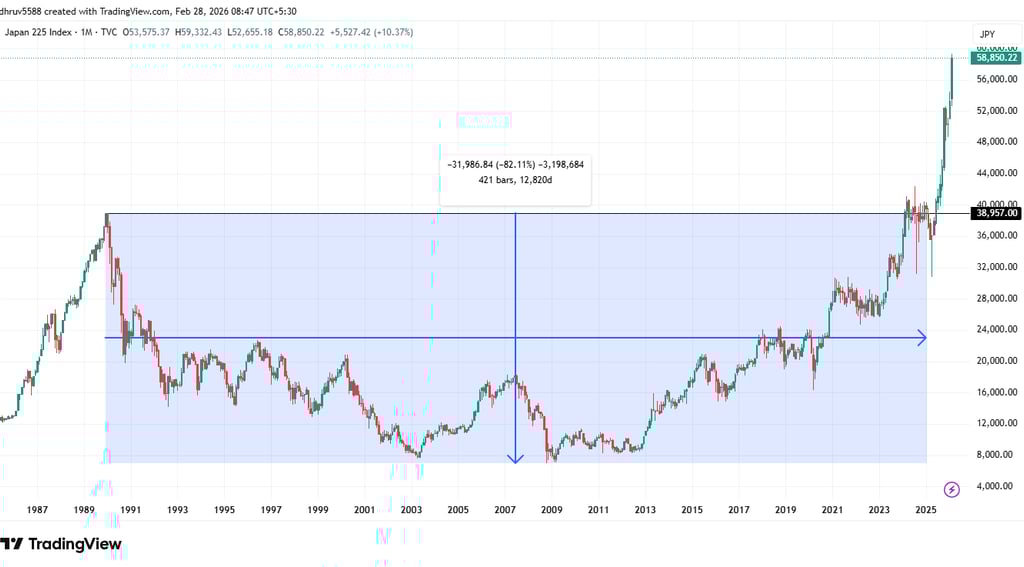
One of the biggest mistakes investors make is stopping their SIP (Systematic Investment Plan) when markets become volatile. When markets crash, fear takes over. When markets rise sharply, greed or overconfidence kicks in. In both situations, many investors pause or stop their SIPs — and unknowingly damage their long-term wealth.
A SIP is not just a way to invest. It is a disciplined strategy built on time, consistency, and compounding. And discipline works only when it continues through both good and bad times.
Markets Move in Cycles — Your SIP Should Not
Markets will always fluctuate. There will be crashes due to global crises, wars, recessions, elections, inflation fears, and unexpected events. There will also be bull runs driven by growth, liquidity, and optimism.
If you stop investing during market falls, you miss buying units at lower prices. If you stop during market highs thinking it’s “too expensive,” you risk missing further upside.
No one can consistently predict tops and bottoms. But consistent investing ensures you participate in the full cycle.
The Power of Rupee Cost Averaging
One of the biggest advantages of SIP is rupee cost averaging. When markets fall, your fixed SIP amount buys more units. When markets rise, it buys fewer units.
Over time, this averaging reduces the overall cost per unit and smoothens volatility. Ironically, market crashes — which feel scary — are often the best wealth-building opportunities for disciplined SIP investors.
Stopping your SIP during downturns defeats the very purpose of this strategy.
Compounding Needs Time — Not Timing
Wealth in equity markets is created through compounding over long periods. Compounding works best when:
Investments are regular
The time horizon is long
Money stays invested
Even missing a few strong recovery months can significantly reduce long-term returns. Historically, markets often recover sharply after corrections. Investors who pause SIPs during panic usually miss these powerful rebounds.
Emotional Decisions Destroy Returns
Most investors stop SIPs due to emotion, not logic:
Fear during crashes
Greed after strong rallies
Overconfidence in market timing
Short-term news influence
But successful investing rewards patience, not reaction. A SIP works precisely because it removes emotional decision-making from the process.
Why Continuing SIP During a Crash Is Powerful
When markets fall 20–30%, it feels uncomfortable. But from a long-term perspective, those are discount periods.
Imagine investing during:
A recession
A global crisis
A temporary panic
If you continue your SIP, you accumulate units at lower valuations. When markets recover — as they historically have — those units generate higher returns.
Long-term wealth is often built during pessimistic phases, not euphoric ones.
When Should You Actually Stop a SIP?
There are only a few valid reasons to stop a SIP:
A genuine financial emergency
Loss of income
Change in long-term financial goals
Rebalancing portfolio strategy
Market volatility alone is not a strong reason.
Smart Tips to Stay Consistent With SIP
1. Align SIP With Long-Term Goals
Invest with a 10–15 year horizon for wealth creation. Short-term expectations create unnecessary stress.
2. Increase SIP When Income Grows
Step-up SIPs annually instead of pausing them during uncertainty.
3. Avoid Tracking Daily Market Movements
Frequent checking increases anxiety and impulsive decisions.
4. Maintain an Emergency Fund
This prevents you from stopping SIP during temporary income disruptions.
5. Automate and Ignore
Treat SIP like a monthly bill you pay to your future self.
Final Thoughts
Markets will always rise and fall. News headlines will always create noise. But long-term investors who continue their SIP through all conditions often come out ahead.
Stopping a SIP during volatility is like quitting a marathon halfway because the weather changed. The real power of SIP lies in discipline, patience, and time — not in predicting market movements.
In investing, consistency beats cleverness. And a SIP, continued without interruption, is one of the simplest yet most powerful tools to build long-term wealth.
Help
Questions? Reach out anytime.
reachus@69waystoinvest.com
© 2026. All rights reserved.
Our Team-
Shrinivas B(MBA)
Ravi (MBA)
Prasad (Mcom)